

SHOCKWAVE THERAPY
StemWave Shockwave Therapy
Heal Chronic Pain. Accelerate Recovery. Get Back to Moving.
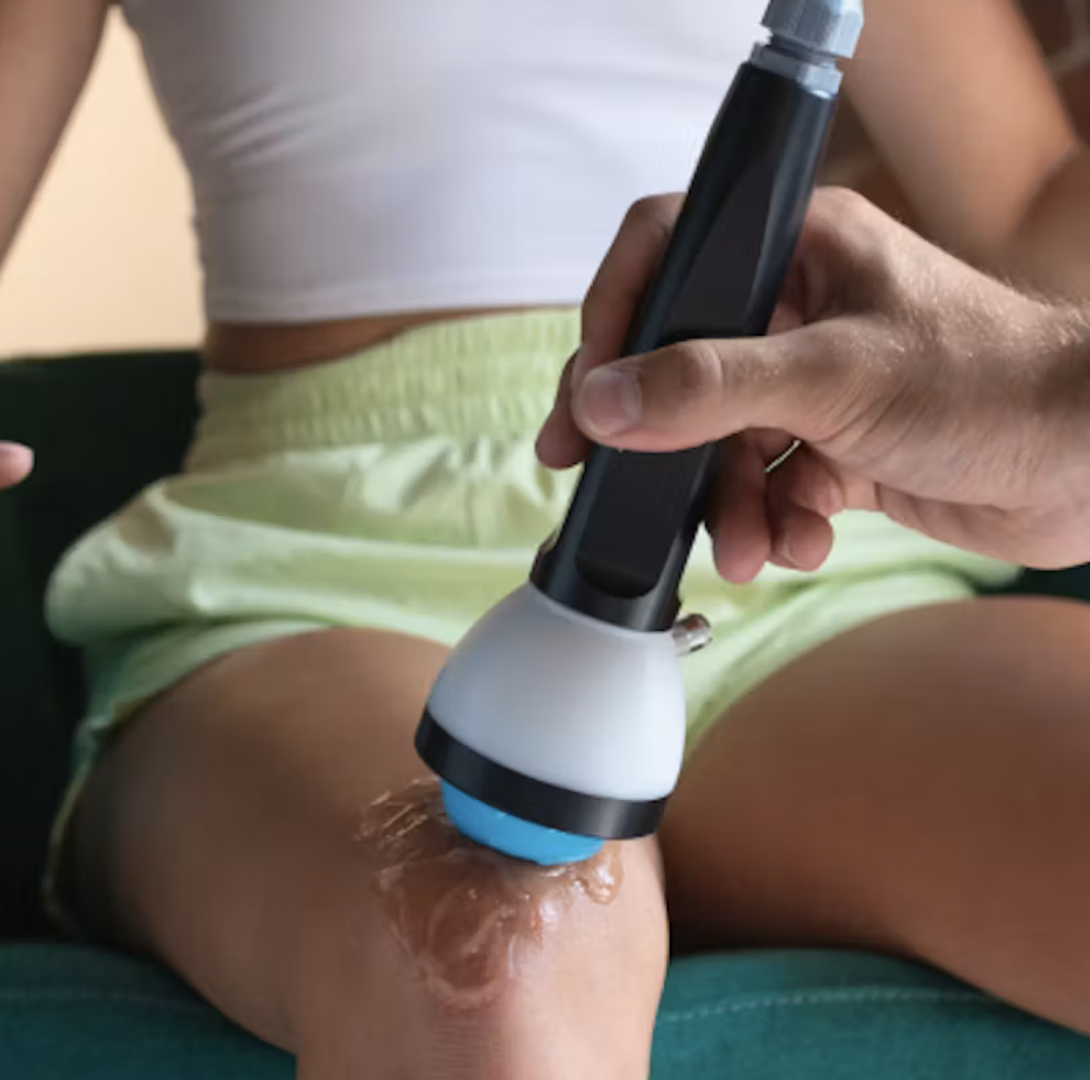
StemWave® shockwave therapy is a non-invasive treatment that uses focused acoustic waves to stimulate the body’s natural healing response. By increasing blood flow, promoting tissue regeneration, and reducing pain, shockwave therapy can help patients recover from chronic tendon injuries, muscle injuries, ligament injuries, and persistent musculoskeletal pain without injections, medication, or surgery.
At Pure Kinetics, shockwave therapy is never used as a standalone treatment. Every patient receives a comprehensive movement assessment to identify why the injury developed in the first place. We combine StemWave shockwave therapy with one-on-one rehabilitation, sports chiropractic, dry needling, corrective exercise, strength training, and movement retraining to improve healing while addressing the underlying cause of pain.
Most treatments take approximately 10–15 minutes and require little to no downtime, allowing many patients to return to normal daily activities immediately afterward. Treatment recommendations vary depending on the condition, but many patients begin noticing improvement after just a few sessions.
If you’re looking for shockwave therapy in Fort Lauderdale, StemWave treatment for chronic tendon pain, or a comprehensive approach to injury recovery, our team can help determine whether shockwave therapy is the right option for your condition.
Shockwave therapy may be beneficial for:
Plantar fasciitis
Achilles tendinopathy
Tennis elbow (lateral epicondylitis)
Golfer’s elbow (medial epicondylitis)
Patellar tendinopathy (jumper’s knee)
Rotator cuff tendinopathy
Calcific shoulder tendinitis
Shoulder pain
Hip pain and gluteal tendinopathy
Hamstring tendinopathy
Knee pain
Shin splints
Chronic tendon injuries
Muscle injuries
Scar tissue restrictions
Myofascial pain
Sports injuries
Overuse injuries
What conditions is shockwave therapy used for?
Extracorporeal shockwave therapy (ESWT) has its strongest research support in chronic tendinopathies and certain stubborn soft-tissue conditions — typically ones that have lasted months and haven't resolved with rest or basic care. At Pure Kinetics we use it as an adjunct alongside progressive loading exercise, not as a standalone fix. Conditions we commonly treat with shockwave in Fort Lauderdale:
Plantar fasciitis / heel pain — one of the best-researched uses of ESWT; commonly considered when heel pain has persisted beyond 3–6 months.
Tennis elbow & golfer's elbow — chronic lateral or medial elbow tendinopathy that hasn't responded to rest (full tennis elbow page here).
Achilles tendinopathy — mid-portion and insertional Achilles pain in runners and active adults, paired with a loading program.
Patellar tendinopathy (jumper's knee) — persistent tendon pain in jumping and lifting athletes.
Calcific shoulder tendinopathy — ESWT has specific research support for calcific rotator cuff tendinopathy.
Hamstring tendinopathy — including high (proximal) hamstring tendinopathy in runners.
Hip pain (gluteal tendinopathy / greater trochanteric pain) — lateral hip pain in runners and adults 40+.
Shockwave questions we hear most
Does shockwave therapy actually work? For chronic tendinopathies, multiple systematic reviews support ESWT as an effective adjunct — with results varying by condition and by person. It works best combined with progressive loading, which is how we deliver it. It is not a miracle device, and we'll tell you honestly if your presentation isn't a good fit.
How many sessions are needed? Protocols commonly run 3–6 sessions spaced about a week apart. Your plan is set after assessment.
Does it hurt? It's commonly described as intense but tolerable discomfort during the brief treatment; settings are adjusted to you.
Is there downtime? Generally none — most people resume normal activity the same day, with temporary soreness possible.
Who shouldn't get shockwave? It's avoided over certain areas and conditions (e.g., pregnancy, active infection, some circulation and clotting conditions). Screening is part of your first visit.
This page is for general education and isn't medical advice. Individual results vary; treatment follows an individual assessment.